
Women’s Leadership in Japan: Promoting Gender Awareness and Diversity in Wildlife Conservation
Mentor: Mizuki Takahashi, Biology and Animal Behavior
Students: Luna Horsley, Tseday Robinson, and Ibrahim Ware
Luna Horsley
The whole research process was a great way to not only learn more about the issue but also practice professional skill development as well as prepare for my career. As someone who wants to pursue a career in research, presenting our findings to the conservation biologists allowed me to practice skills in interviewing and presentation. In addition, attending the conference will also help me to engage in these abilities once again. I felt that I especially got to prepare for a future career in conservation biology as well by talking to professional conservation biologists. Interacting with professionals in the field and engaging in their work also allowed me to get a first-hand chance to see what possible career options I may one day pursue. I felt that it was very impactful to my future, and I learned a lot about how I want to continue to contribute to conservation biology.
Tseday Robinson
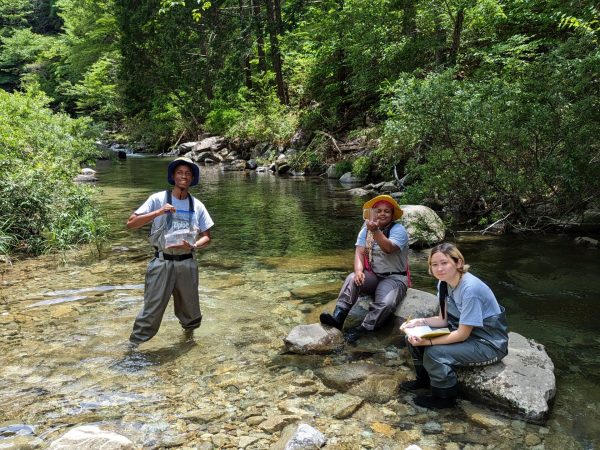
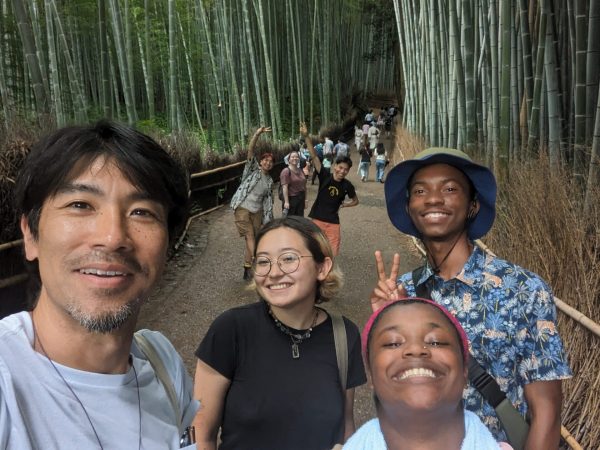
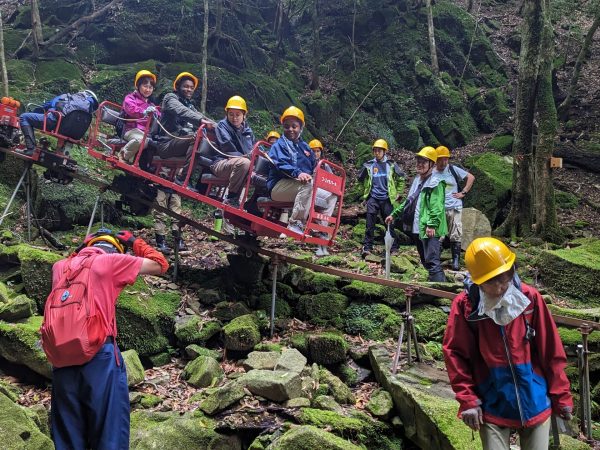
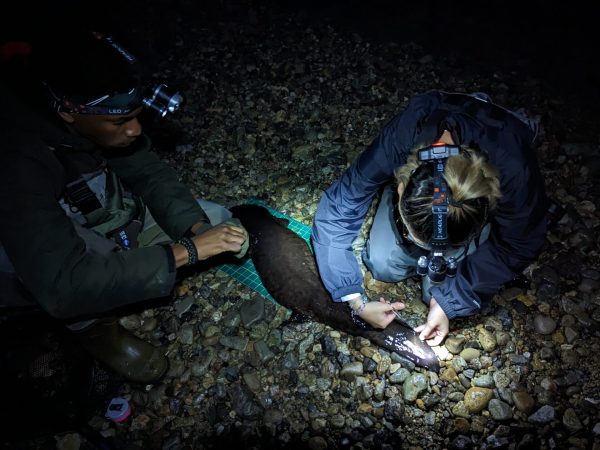
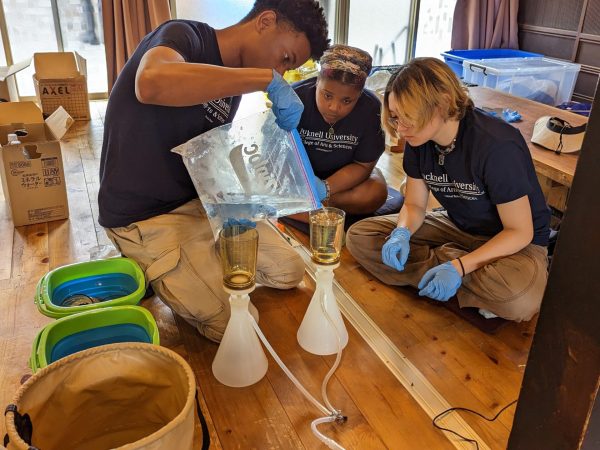
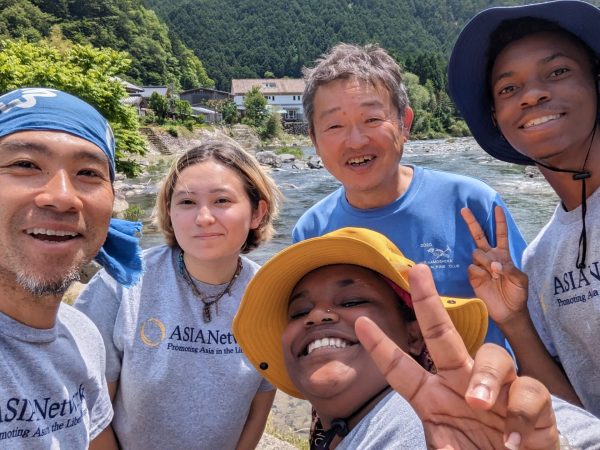
In June 2023, I and two of my fellow labiates were able to go to Japan to research their gender gap with a main focus on conservation biology. And as for someone who has never left the country in her life, to not only being able to experience a different culture, learn about my interest, have a research experience and also celebrating my 21st birthday in a whole new place was something I could have never imagined for myself, nor did I think of myself worthy enough to be that lucky. I always wanted to go to Japan, it has been a dream of mine ever since I was two years old. So, I have done lots of research and studied the language to understand the culture and try to be the most respectful. I was also lucky enough to travel with my lab mates and my professor who have all experienced Japan in their own ways. I was able to use their knowledge as guidance and education to enlighten my experiences. Even though our research dealt with a lot of interviewing women in conservation biology, we also got to connect with these women by getting hands-on with the type of work they do. For example, Takagi-San does research with Japanese Giant Salamanders. We were able to go out and do night surveys, collect water samples, and even start the process of DNA extraction with her. Mine-san and Taniguchi-san, are turtle researchers, they were able to show us their work and teach us their methods in finding the turtles, while also answering my many absurd questions. Every day I came back to my room with many observations and knowledge on things my mind never thought of.
Ibrahim Ware
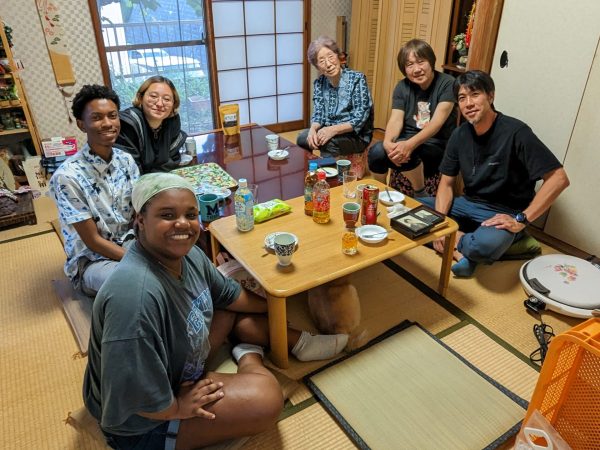
We spent a month in Japan which gave us a considerable amount of time to learn about the local culture through exploration and interactions with local people. We experienced great kindness from our hosts, interviewees and the people we encountered throughout our trip. We learned that it is a part of Japanese culture to give gifts called “omiyage” to visitors or upon returning from a trip. Also, by attending social gatherings, eating meals, and visiting cultural sites, we increased our understanding of the culture. I learned and developed science skills in a global setting, acquiring and utilizing field skills such as wildlife handling, biometric collection, microchip insertion, and field note taking. Lab skills, which would involve molecular work such as the filtration of water samples and DNA extraction for environmental DNA analysis, were also gained and enhanced. These science skills aided our work with Japanese researchers who had culturally, historically, and systemically unique approaches to science that we could learn and benefit from.