
Epistemology of Primatology in Japan and the U.S.
Students: Brie LaPree Chavez, Jordana Groveman, Christian Baccay, and Grace Kocur
Grace Kocur
Not only have we developed highly useful scientific skills, but we have also gained knowledge through this experience to aid in our preparation for future careers. Practicing science in a global context has allowed us to collaborate with people from all over the world with different perspectives and insights that have been valuable in considering further education and career paths. Through this project we gained casual mentorship from professors, graduate students, and postdoctoral fellows. Our discussions ranged from schooling opportunities and possible paths of study to types of professions available in the field and general reassurance that was greatly appreciated by us students who are sure what we can or would like to do after college. Through these talks, I have begun to consider programs offered by Kyoto University and other universities outside of the United States as possibilities for graduate school. This opportunity has led me to build important international connections and left me feeling better prepared to navigate the next steps in my education and career.
Brie LaPree Chavez
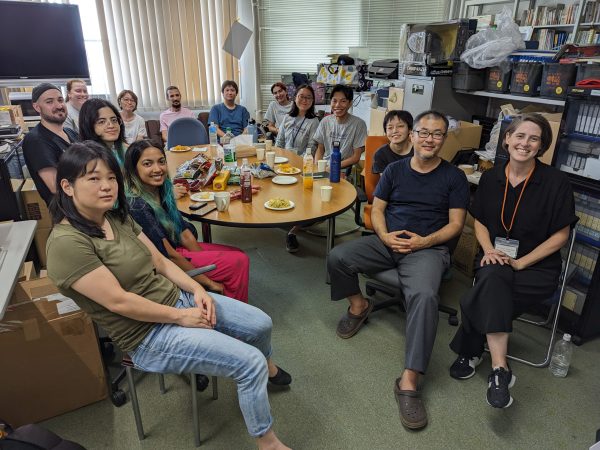
This trip helped me prepare for my career by giving me many opportunities to network and explore a specific part of the animal behavior field. I am currently an animal behavior major and would like to explore careers related to this field in either a research or conservational setting. By going to Japan and working with primatologists from many different backgrounds, I was able to get a better idea of what a research position in animal behavior would be like. While I was there, I talked to the graduate and postdoctoral students to ask for advice and collect stories of how each of them got to where they are now. This was not only helpful for personal growth and development, but it also gave me the opportunity to network which will be helpful later on in my professional career. On top of this, we met with a former Bucknell animal behavior student, Casey Mack, who had spent the past year in Japan as a science teacher. She was able to give us valuable insight as to what it was like to work in Japan coming from the U.S. and how she incorporated that into her own scientific perspective.
Christian Baccay
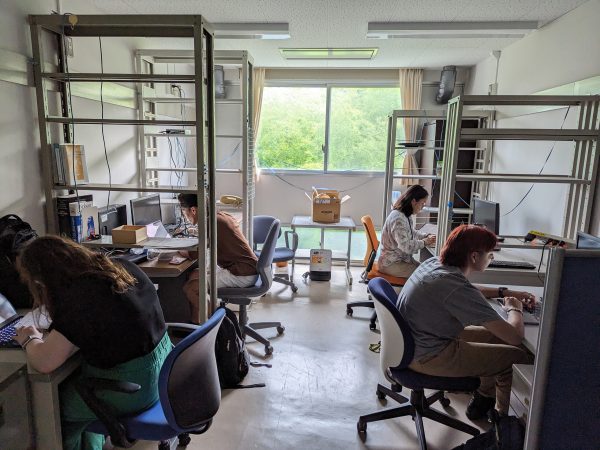
My experience in Japan has expanded my practical and professional skill set and has equipped me with valuable assets for my future career. Our biweekly journal meetings leading up to our Japan trip have honed my ability to dissect and comprehend scientific papers. Moreover, my time in Japan allowed me to create connections with like-minded students who share my passion for primatology. The networking opportunities that arose during this project, particularly at EHUB, have granted me a valuable resource for potential future collaborations or assistance should I decide to pursue further work in field. Another valuable experience that I had in Japan was the opportunity to observe and learn from the graduate students at EHUB. This exposure improved my grasp of scientific methodology as I witnessed the construction and refinement of experiments over time. Notably, I observed how the graduate students maintained their research focus and purpose, even in the face of potential distractions. Witnessing their interactions with their advisors really showed the importance of staying focused on the original research objectives. My time in Japan not only expanded my knowledge in primatology but also equipped me with invaluable skills, including increased scientific literacy, networking skills, and a deeper understanding of the scientific methodology. These skills will undoubtedly prove invaluable in my future career endeavors, whether they lead me back to Japan or elsewhere in the field of research and academia. In terms of student career and professional skill development, my experience in Japan definitely left me with skills that I can apply to my career in the future. EHUB provided a number of seminars that helped in this area. For example, a speaker presented every Friday about their research and findings. From this I was able to observe how to give an effective presentation as well as how to engage an audience. Additionally, EHUB hosted seminars showing how we could use technology to assist our research. These experiences have not only expanded my skillset but also bolstered my confidence in my ability to communicate ideas effectively and harness technology as a powerful tool in my future career.
Jordana Groveman
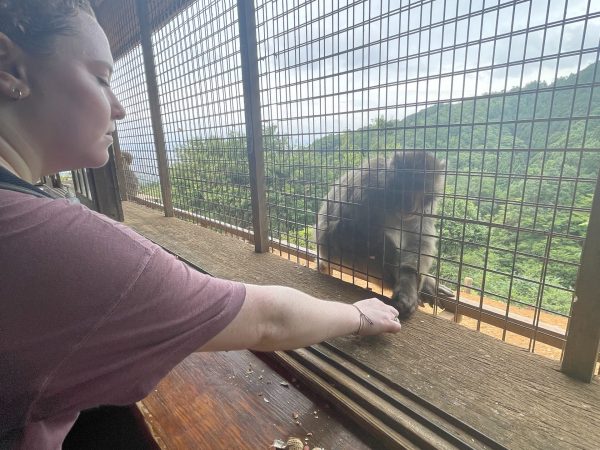
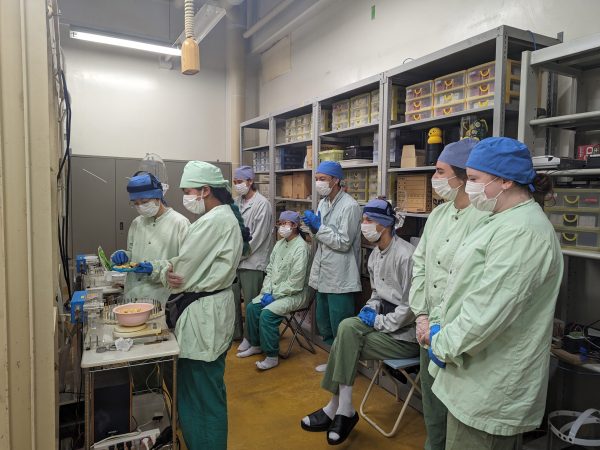
Throughout the trip, we gained professional behavior skills in various settings and improved flexibility and cultural awareness when observing and adapting to customary behavior. These skills will be beneficial as traveling scientists forming global connections. We attended many meetings with fellow scientists at EHUB—the international scientists we shadowed and other Japanese scientists— to discuss data, experimental design, research findings, and current literature. Through these meetings, we learned how to communicate scientific concepts, develop effective studies, and provide constructive feedback in an academic setting with a diverse group of individuals. We also observed many sessions of different studies with the chimpanzees, as well as with Japanese macaques and an orca, which exposed us to the practical limitations and challenges in research with animals. Our observations and personal research have helped direct our own views on the study of science so we may develop our own approaches.