Envisioning Post-Pandemic Tourism through Japanese History
Mentor: Lisa Yoshikawa, History and Asian Studies
Students: Jonathan Garcia, Roxana Peña, and Tenzin Yonten
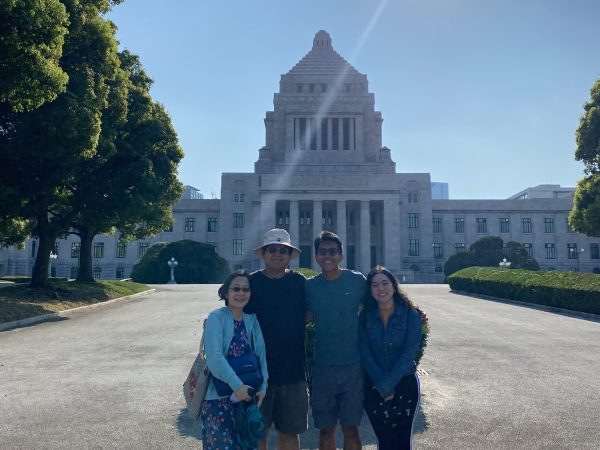
Project AbstractThe fieldwork experience was critical to deepen the understanding of the project. Reading historical JTB guidebooks provided a particular narrative of how this agency tried to self-exoticize Tokyo and hence Japan. These older guidebooks, however, had minimal photographs if at all, and the information relayed was limited due to length restrictions. Visiting the shrines, temples, gardens, museums, and other sites recommended by these guidebooks allowed for better understanding of what the guidebook authors were trying to accomplish. Many sites were altered from the time of guidebook descriptions, and witnessing choices to preserve, reconstruct, fix, renovate, remove, or add relayed nuances of intents and a layer of historical understanding. Experiencing these sites alongside other tourists and observing their behavior and sometimes talking with them provided a perspective into how the JTB recommendations are received. Walking the guidebook paths was the only way to experience the scale of Tokyo and its metro area, olfactory factors (or the lack thereof), and other sensory matters difficult to relay over ink and paper.
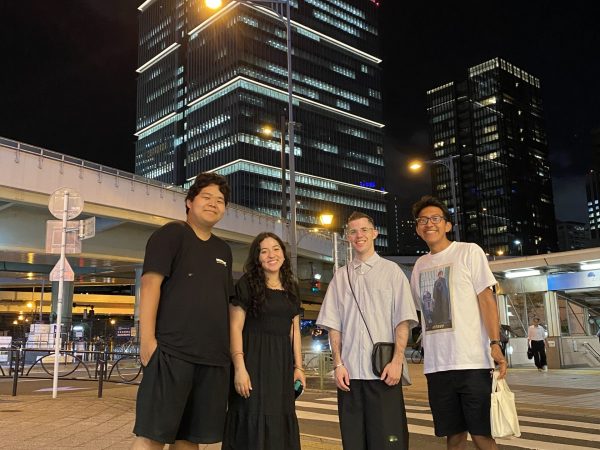
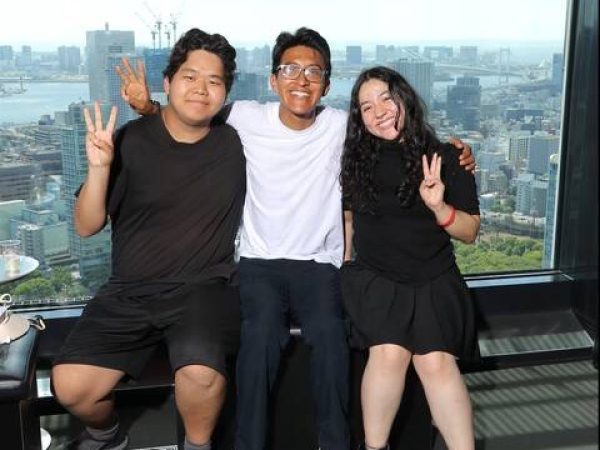
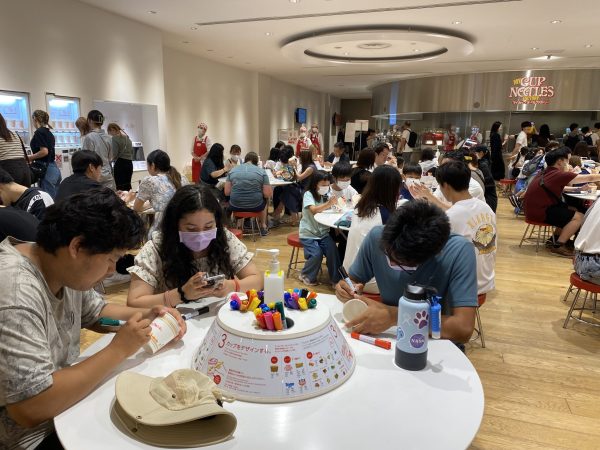
The fieldwork provided ample opportunities to interact with locals, as well as other tourists, as illustrated in Jonathan’s report. The students are all at least native-bilingual/bicultural and some have made attempts to learn other languages/cultures including Japanese. Hence, basic Japanese phrases were quickly mastered, and from day one simple exchanges were made in Japanese. Daily conversations included those with shop keepers and restauranters to people on the street; other forms of interactions included observation and participant-observation. Partaking in shrine and temple rituals, going to a public bath, attending baseball games, etc., all led to intimate communication in shared spaces and led to familiarity with formal and informal lives of Tokyoites. Interviewing and thereafter spending unstructured time with Technos college students was also fruitful. HWS and Technos, located in the outskirts of Tokyo, have had a sibling relationship for decades; students are exchanged regularly for visits and online language exchanges have been conducted in the past. An interview was conducted with a group of about ten Technos tourism major students (and a professor), through which the most recent tourism trends from younger people’s perspectives were learnt. The students also spent free time together to get to know each other generally and exchange contact information in the end. Technos students had very little English and our team had even less Japanese, but they had good conversations without intervention by professors. A meeting was also held with an HWS alumnus, Andrew Upton (Hobart class of 2012), who lives in Tokyo and works in the animation industry. Andrew was an Asian Studies major and is now fluent in Japanese; he also happened to have been part of the second SFF that HWS was awarded (2010) led by The Venerable Tenzin Yignyen to Dharmsala, India. Stories were shared about career planning after college, life in Asia, and about recommended tourist sites.
Jonathan Garcia
Activities conducted so far include having three weeks of fieldwork in Tokyo, Japan visiting and collecting data from over three dozen sites. The original proposal required us to spend an additional week in Japan and visit the sites in Kyoto that were gathered from the Japan travel guides during pre-fieldwork research. The data gathered and compiled includes collecting and sorting photographs, postcards (if available), videos and written work as well as an analytical reflection of each site.
In terms of my career in education, I am aiming to attain my bachelor’s degree in mathematics by the end of the 2023-24 academic year. I got to take an introductory course in Japanese and become more prepared for our fieldwork and learn things about Japanese culture. I was inspired to then study abroad in Germany and Poland to learn about the Holocaust and joined a Human Rights & Genocide student board because I wanted to learn more. This summer, I got to start working as an AmeriCorps VISTA member for the Geneva High School and Finger Lakes Community College as a pre-college advisor because I realize that opportunities like the AsiaNetwork Student-Faculty Fellowship provide valuable experiences and I want others to get a chance to follow their interests in higher education.
Roxana Peña
Interaction with the students at Technos College (August 1) provided a new perspective on tourism, revealing Japan’s inclination towards domestic travel rather than international exploration. Meiji Shrine’s popularity among international visitors illustrated its universal allure as a spiritual and cultural landmark. Further explorations of Ueno Zoo, Ueno Park, and Tokyo National Museum (August 2) highlighted the intersection of education and entertainment, drawing visitors from around the world. On August 3, it was Toyosu Market’s bustling tuna auction and Hama Detached Palace and how their scenic landscapes exemplified the range of experiences offered in Tokyo’s vibrant atmosphere. The journey concluded with visits to iconic sites, such as Tsukiji Nishi-Hongan-ji, Tokyo Tower, and Zojoji (July 31). They showed how Tokyo still had a spiritual and architectural diversity, which made people around the world want to visit Japan.
Tenzin Yonten
The fieldwork we did in Tokyo enriches my worldview, which is especially pertinent as my long-term career goal is to become a lawyer working on international human rights law, which requires me to have a diverse viewpoint, something that can only be gained by truly immersing myself in different countries and cultures like I was able to do with our fieldwork.
Working on the presentations and posters that we plan to have prepared for next year’s many events is an important skill set for me as a teacher right now. Being able to synthesize all of the data that we have collected into a concise five-minute read is the exact kind of skill set I need to apply right now in my job, having to compress the knowledge of our textbooks into bite-sized memorable nuggets of information for my students.