
Intercultural Art Practice in South Korea
Students: Isabella Gaetjens-Oleson, Joanna Locke, Madai Huerta, and Ayanna Njoroge
Isabella Gaetjens-Oleson
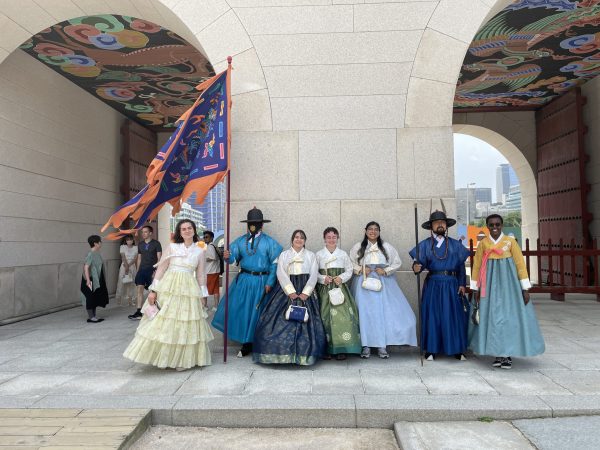
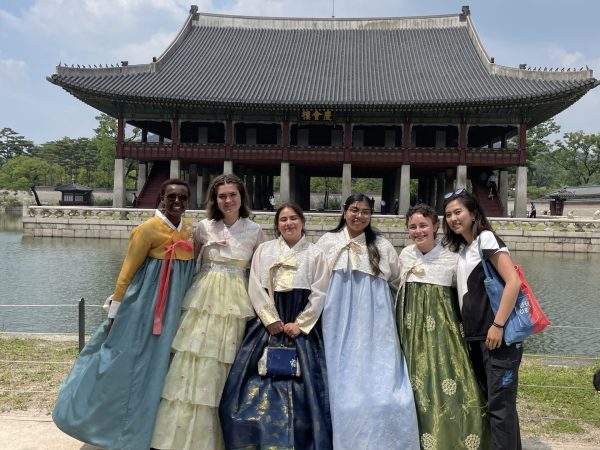
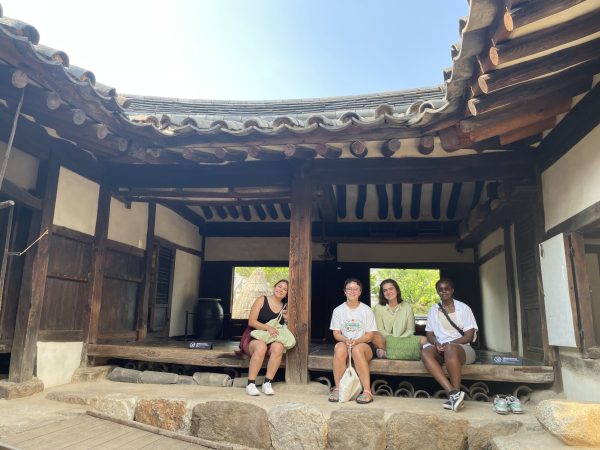
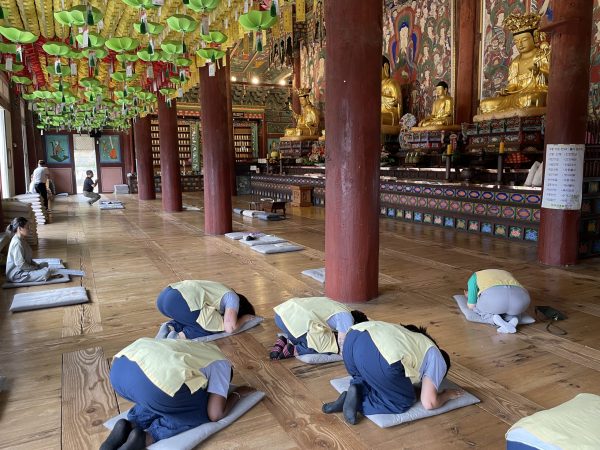
For me, gaining a broader understanding of Korean culture means gaining a sense of cultural competency that will aid in my future career. I am eager to become a licensed mental health counselor, and I will be starting graduate school for my Master’s in clinical mental health counseling in the Fall of 2024, so this experience is one that I am sure will equip me to treat a wider variety of people. In my psychology classes, we talk often about the importance of cultural competency within the helping professions. Understanding social norms, expectations, familial structures, and history within any given patient’s cultural identity is key to offering proper care. I am so thankful for having the opportunity to attend this trip with Professor Kang and my fellow classmates, and I look forward to returning to Seoul in the future. Throughout the three weeks we spent in Seoul, I was exposed to a vast array of new experiences. My eyes were opened to the world of printmaking, but also to the rich culture that is evident in South Korea. Through working with local people and artists in Seoul, experiencing various historical and cultural practices in the country, and simply learning to navigate a large city, I learned so much about myself and the amazing place that is South Korea.
Joanna Locke
Through this program, I have been placed as an intern with both Dieu Donne and Artists Jazmine Catasus for the semester. Through these roles I am continuing to build on printmaking and papermaking skills learned in Korea. Additionally, I am participating in an Artist Residency working to complete my Senior Portfolio. A portfolio drawing on my experiences this year as I have been able to travel and observe this motif of progress and preservation. I plan to continue to explore and research topics in Korea as they relate to my thesis. This project continues to have an impact on my ever-growing creative mind and I am excited to share this impact in our exhibition and artists talk at the Depree Art Center from September 2023- October 2023. Additionally, the potential to present our work and experiences at Southern Graphic Council International 2023 and at the Asian Network Conference in Atlanta at the beginning of next year. As an aspiring professional artist, the experience of learning, creating, and exhibiting in Seoul, South Korea at the age of 20 is astonishing. Not only was I able to grow my creative network on a global scale, but I also expanded my creative knowledge of printmaking as an art practice. From this experience I find myself being more open-minded and inquisitive. I have gained an enormous amount of global cultural competency and I am incredibly thankful for this opportunity and for where the knowledge I have gained will take me.
Madai Huerta
My time in South Korea allowed me to learn how to communicate with a language barrier. I was in a vibrant community that occasionally pushed me out of my comfort zone. It is essential to be uncomfortable to grow in a practical and professional way. Printmaking requires a lot of patience and skill to get a good outcome. Unlike the structured classroom environment at Hope College, my studio time in Korea was self-directed. I enjoyed translating my own ideas into new creations. This practice has no space for being in a rush and not much space to make mistakes. This process allowed me to take very calculated and planned steps. Some of the skills that I honed during this experience will prove to help with my transition from an undergraduate level to a graduate level. I can use the skills that I learned in a graduate school application process as well as create a strong portfolio. They also open doors for artist programs like residencies and fellowships around the world. It has also helped me make art after graduation, which at times, can be a difficult transition. I am starting my career off strong in the art-making process which will open up job opportunities in a studio workplace.
Ayanna Njoroge
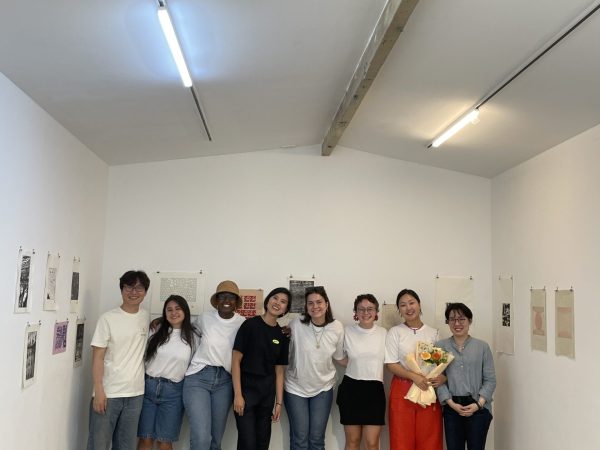
While on this trip, I developed skills in various methods of printmaking, intercultural communication as well as gallery preparation. On the final day of our time in Seoul we exhibited the work we had made up until that point in a small gallery space near the studio. Curation was something I did then for the first time. We each chose about 5 pieces of work we wanted to show and worked in the gallery to display our works in an interesting way. It was important to practice the skill of selecting work and narrowing them down to the most appropriate ones for the space and my intended interaction with the viewers. It was exciting to see these skills as potential steps into careers in the art world such as studio heading or assistantship. There was work that went into learning how to transport and package work correctly since this was a cross-national process. I also now see ways that I can incorporate these skills in an art based corporate setting of marketing or advertising which I see my Environmental Studies major playing a role in. In conclusion, this trip was one which expanded my knowledge of Korea in multiple facets, socially, culturally and historically. This then pushed my conceptual development, challenging me as an artist. An appreciation for the traditional and modern lives and ways of living of Korean people has grown in me and throughout the art-making process and since we got back I have loved seeing how that has influenced my work.