Chanoyu “The Way of Tea”: Embodied Learning and its Significance
Host: Yukari Hirata, Japanese
Resident: Soryu Yamakawa, tea master from Kumamoto, Japan
Project Abstract
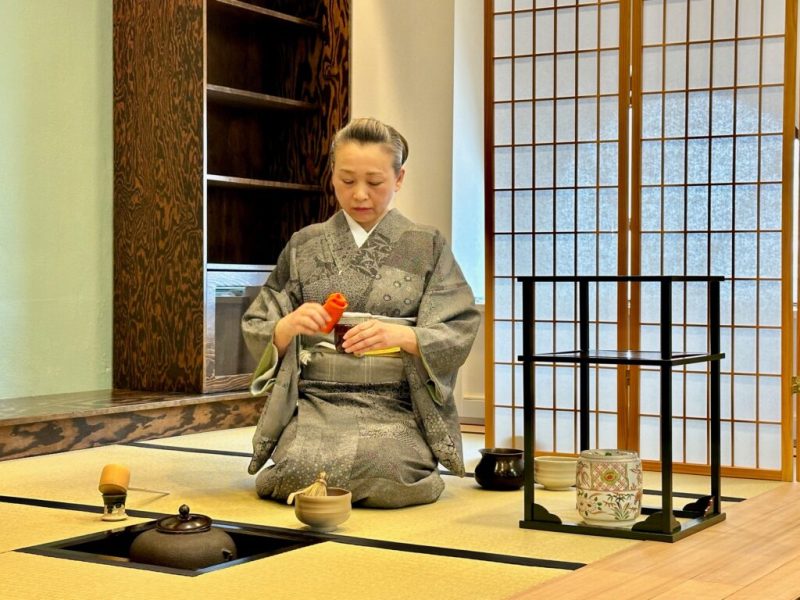
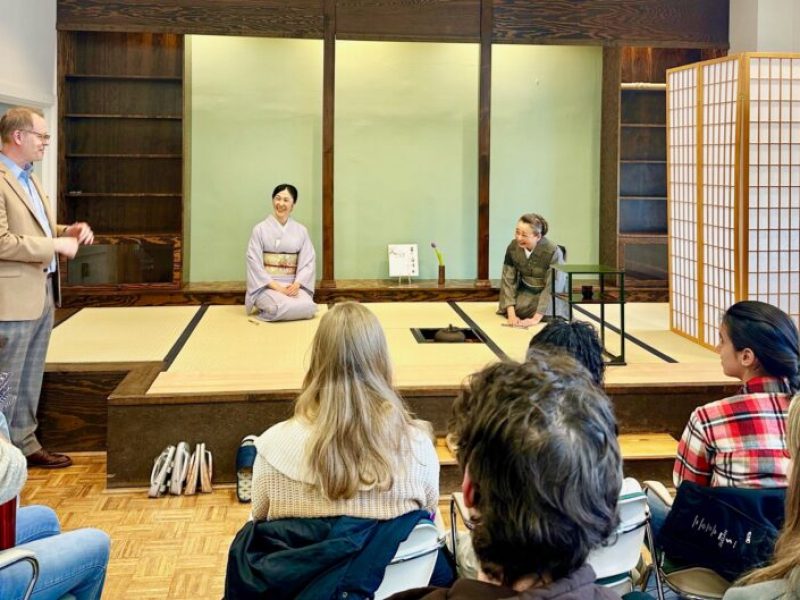
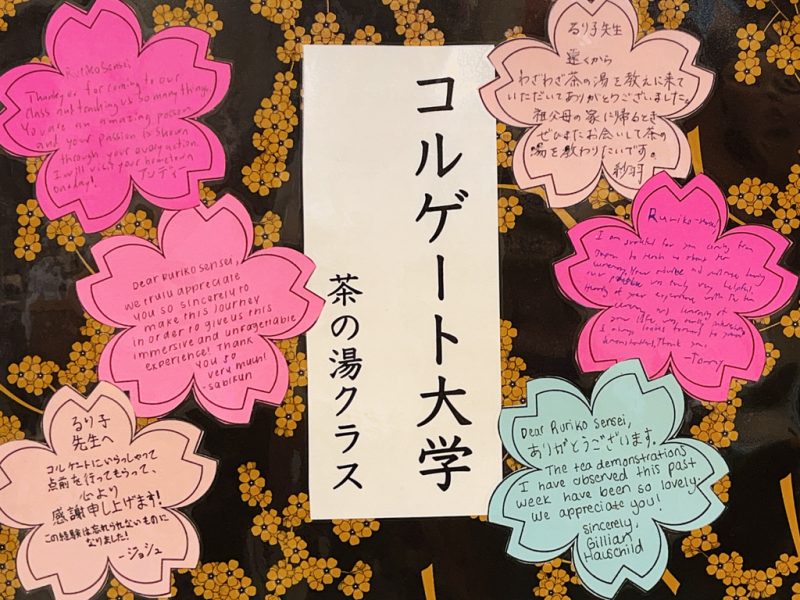
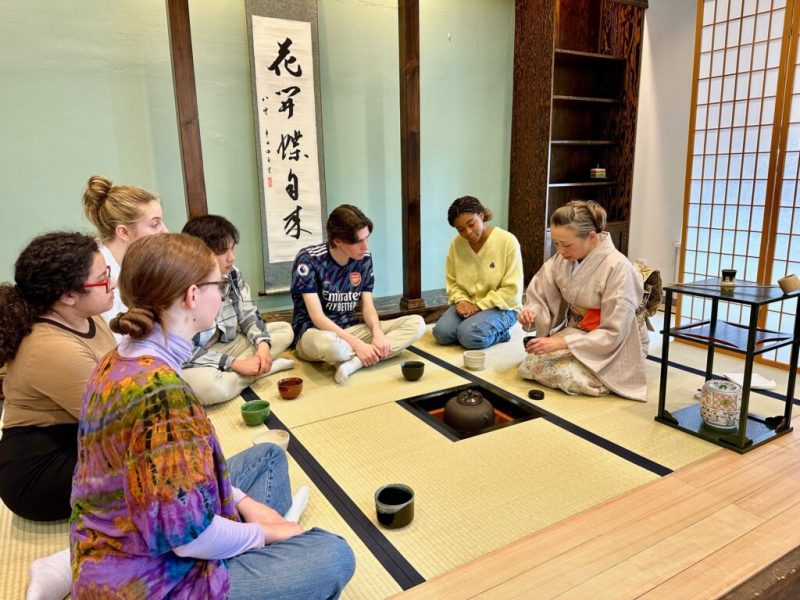
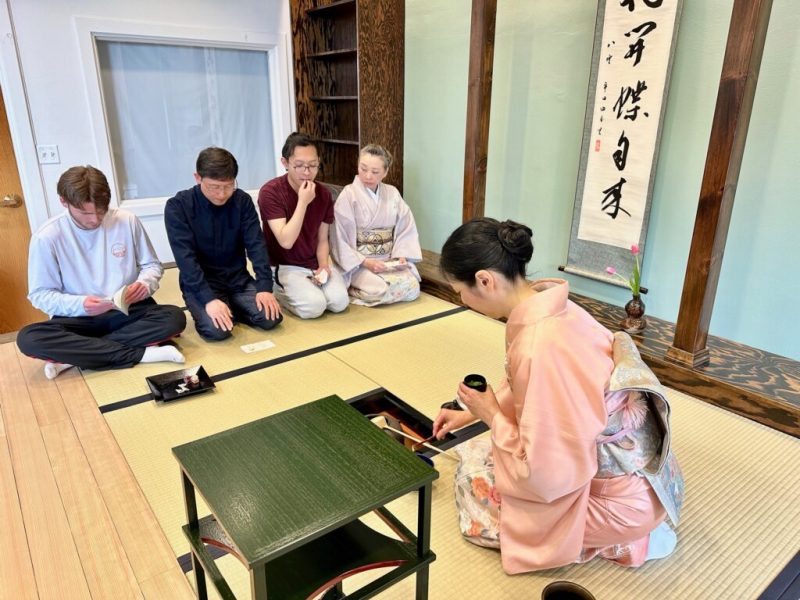
“The way of tea,” chanoyu or chado/sado, was formalized by Sen no Rikyu in the 16th century in Japan, with “harmony, respect, purity, and tranquility” as its principles. It is one of the most direct practice of Zen Buddhism tradition in Japan. Many chanoyu demonstrations by certified tea masters have taken place in the U.S. in the past decades, but many parts of this intricate art stay mysterious or hidden to many people. This proposed program will invite a Tea Master, Soryu Yamamkawa, from Kumamoto, Japan, to Colgate University campus, and will provide lectures and embodied learning sessions to students and faculty of various departments from both Humanities and Science. Participants are drawn from not only Japanese, Chinese, and Asian Studies major programs, but also from Departments of Art, Religion, Psychology, and Neuroscience, the Liberal Arts Core Curriculum, and the Mind, Body, and Behavior Initiative of Colgate University, as well as those from nearby universities. Participants will engage in embodied learning by sitting together with Master Yamakawa on the tatami floor in a small Japanese room, following her instructions, and practicing parts or whole of the tea ceremony. The embodied learning will be coupled with lecture/discussion sessions. What do you uniquely obtain by concrete embodiment of chanoyu as opposed to just reading or hearing about it? What do you gain from slowing down in the modern world and receiving a bowl of tea as once-in-a-lifetime experience as Tea Masters would say? What are the effects of learning by seeing, touching, hearing, and smelling — but not talking? What may be the cognitive effects of embodied learning, and what kind of scientific research we might develop? Coupled with their embodied experience, participants will reflect, discuss, and write essays on these topics, and discuss ideas for possible interdisciplinary research.