
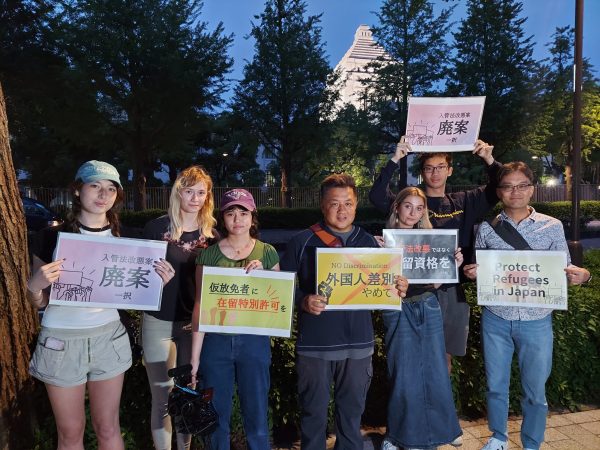
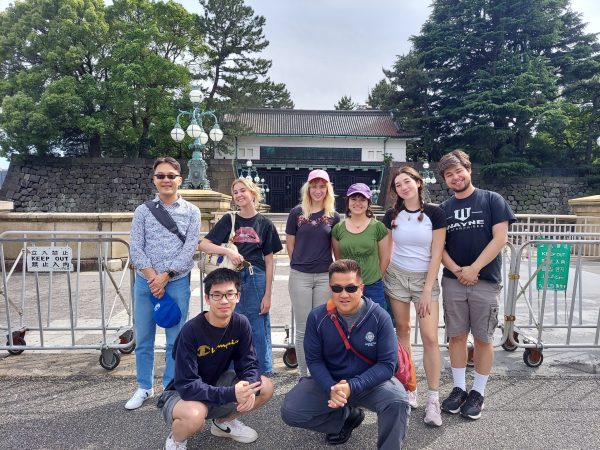
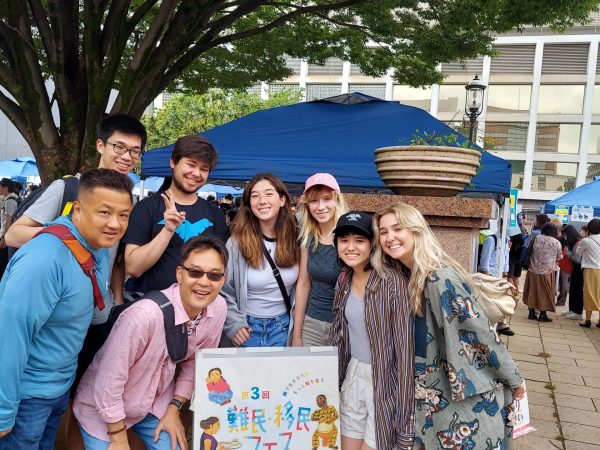
The Aspirations of Asylum Seekers, Refugees, Labor Migrants, and Immigrants in Japan
Mentors: Taku Suzuki, International Studies, Denison University and Sam Pack, Anthropology, Kenyon College
Students: Grace Han, Evan Snively, Lauren Dempsey, Mia Tsuchida, Valerie Kakos, and Long Tran
Grace Han
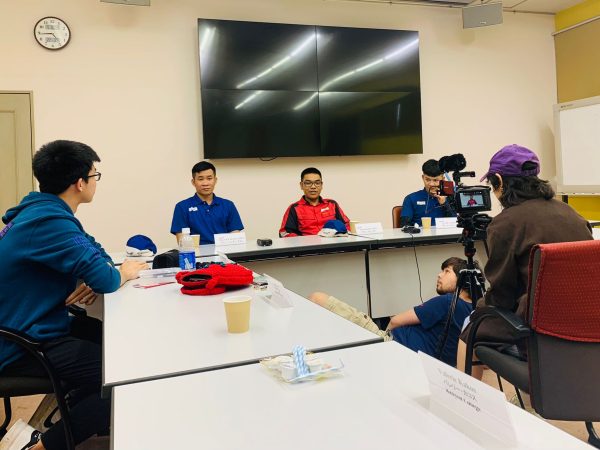
Taking part in this fellowship has enabled me to refine my interview skills as well as grow my confidence in traveling internationally. Conducting multiple interviews improved my ability to connect with strangers and make them feel comfortable enough to discuss stressful and life-altering experiences they have gone through in their lifetimes. I bonded with the interviewees I spoke with, and I hope that our project can have a positive impact on their lives––or the lives of their children. When meeting with residents of Japan to discuss the politics and cultural context surrounding Japanese migration issues, I was able to form professional relationships that may very well become useful in my future career.
Evan Snively
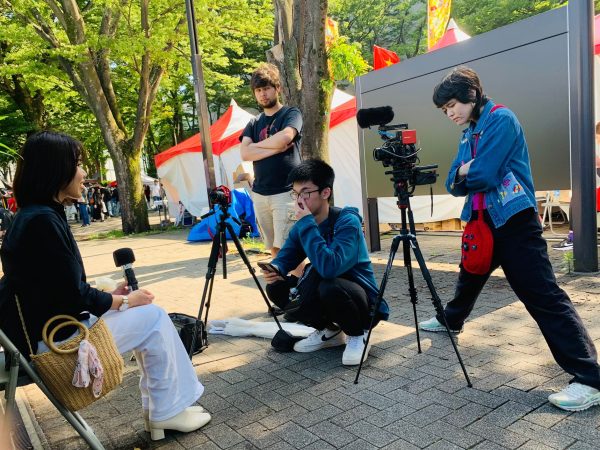
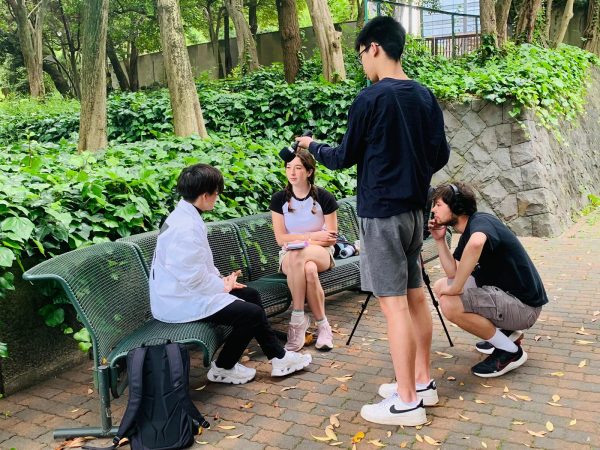
My involvement in creating this documentary has deepened my passion for visual storytelling and social issues. It has provided me with hands-on experience and a tangible product that showcases my skill and commitment to making a positive impact. In the coming year, I intend to seek opportunities for work in the Cinema field, even possibly in Japan. My work on this project and the experience I’ve gained will provide excellent preparation for the working world ahead. In conclusion, my experience as a camera person and audio technician in creating a video documentary about Turkish Kurd and Vietnamese immigrants in Japan has been a useful and positive experience. It has allowed me to explore the intricacies of immigration struggles in an Asian context, develop practical skills, and prepare for a career dedicated to using visual storytelling to advocate for marginalized communities. I look forward to the documentary’s impact and the opportunities it will create in the future.
Lauren Dempsey
I was able to practice my Japanese and French language skills throughout this project, as well as learn how to conduct concise yet informative interviews. I was also introduced to fieldwork and got a sense of what a career in anthropology could look like in the future. It was interesting to learn about research methods when working firsthand with the individuals we were researching, and I believe I have gained many skills through this experience. I am interested in pursuing a master’s degree in East Asian studies or anthropology, so this experience was very valuable in building skills I would use in my academic future.
Mia Tsuchida
The project tested my skills of communication, organization, adaptability and language, all of which I believe has improved as a result of my time in Japan. This kind of field work is most certainly applicable in my field of study and is an experience and technique that I will take with me. As for the post-production side of things, working on editing this project tested my time management skills, as well as proficiency in Adobe Premiere Pro (an editing software typically used in the professional setting). The sheer time I dedicated to editing increased my comfortability and expertise in the software and helped to practice my Japanese. This project allowed me to create a large-scale project from start to finish and my time over the summer editing and translating mimicked the environment of a full-time editor, a job I aspire for my future.
Valerie Kakos
This research project has left me not only with lasting personal experiences and connection, but professional ones as well. Conducting interviews in Japan ensured I left the country with a stack of business cards from our interviewees and their organizations. I have since researched several of these organizations more thoroughly with a focus on possible future careers. I have also been in contact with past professors of mine regarding next steps after graduation for getting a job in Japan and improving my fluency. I plan to apply to the JET program this academic year, which employs native English speakers to teach English in Japanese schools. Several friends of mine are currently abroad on this program, and I have been in contact with them as well in preparation for the application process. I intend to graduate this year, hopefully, with honors and, possibly, a job lined up in Japan.
Long Tran
As one of the main interviewers, this journey served as a profound and practical learning experience that significantly enhanced my research, interview, and cross-cultural communication skills. Through the process, I had the opportunity to develop and refine my ability to craft effective questions that could uncover the nuanced stories and experiences of the people we interviewed. This skill was not only pivotal in extracting valuable insights but also in building trust and rapport with our interviewees, allowing for more open and candid conversations. Moreover, the journey deepened my research thinking and analytical skills. I learned how to sift through a multitude of data and discern the most relevant and impactful information. This skill was crucial in distilling the essence of each interview and weaving together a comprehensive understanding of the complex issues at hand. It also sharpened my critical thinking abilities, enabling me to approach our research with a discerning eye and an open mind.