A Study of Agriculture, Marketing and Environmental Practices of Rural Communities in Taiwan
Mentor: Dongping Han, Political Science
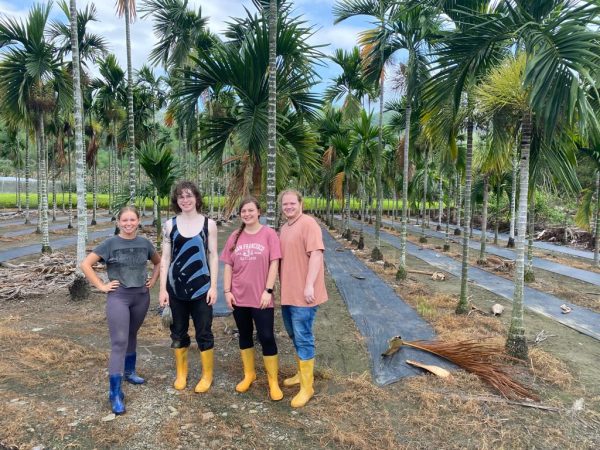
Students: Maegan Craig, Callum Dooley, Tara Carroll, and Nick Newman
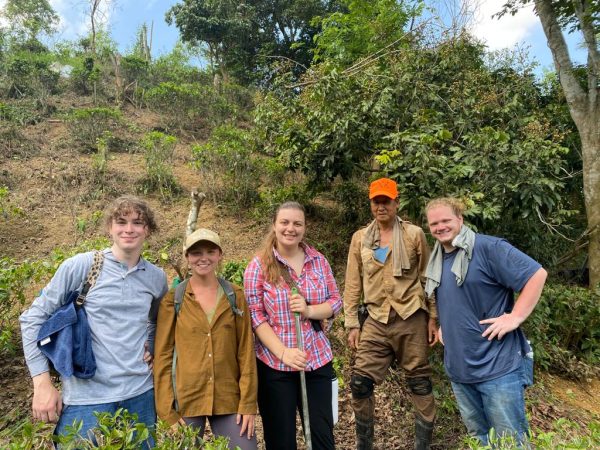
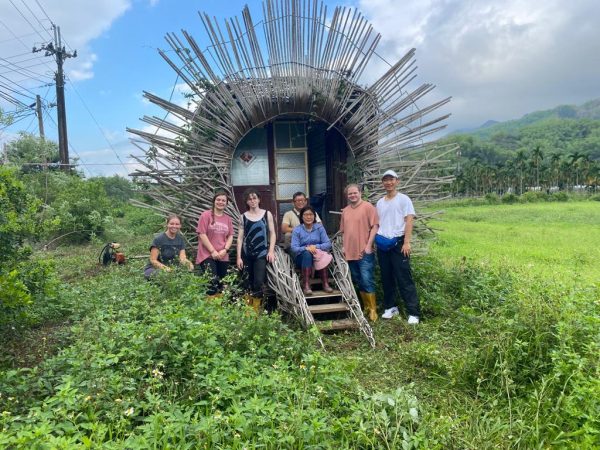
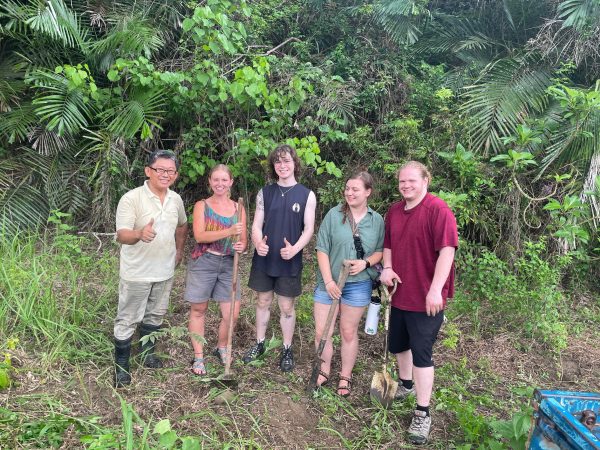
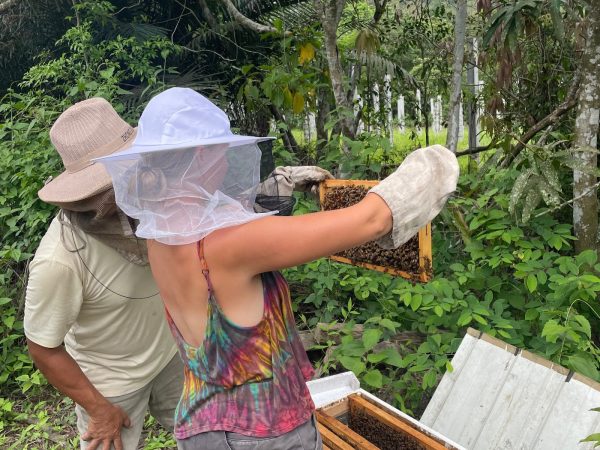
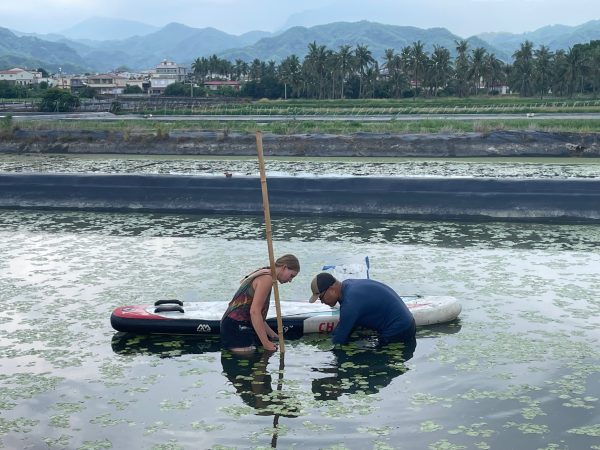
Project Abstract We visited Gaoxiong in southern Taiwan, Hualian in the middle of Taiwan, and Taibei, the capital, in the north of Taiwan. We had ten local speakers in Gaoxiong, Hualian, and Taibei, and interacted with several NGOs, and worked with several farmers in the fields. We learned so much from these speakers and NGOs and farmers. Our students were impressed by the NGOs as well, they worked and learned much from the farmers we lived and worked with. One of our students is planning to be a farmer, and for her the impact is most. One other student grew up on a farm, but she did not plan to be a farmer herself, but this trip might impact her career choices. The two other students worked on farms before, but did not think that they would be farmers. But the experience in Taiwan left deep impression on them. They talked about doing something related to food production their career planning.
What I learned from Taiwan confirmed one of my hypotheses that not all people are suitable to this high pace modern lifestyle. For those people, a more flexible rural lifestyle might be better for them. The fact that we have so many mentally sick people and so many homeless people in the urban areas is related to the threefold crisis of agriculture, rural areas and farmers. Agriculture should not just produce food as cheaply and efficiently as possible. It should also serve as a sector that absorb surplus labor that cannot survive in the urban areas. Allowing more people who cannot survive in the urban areas to find employment in the rural setting might be a solution to our problem of homelessness and mentally sickness. I hope more people and more politicians can see the connection between the two problems.
Maegan Craig
While in Taiwan I got out of my comfort zone for one of the first times in my life. I have never really been out of the southern United States and I honestly thought that it had some of the best things life could provide me with. I had no context about a life outside of this area or cultural differences. My worldview was quite narrow. I grew up as a farmer’s daughter, one who used lots of pesticides and machinery to get work done and was very focused on producing as much as possible. In Taiwan I got a chance to see farmers who were very different from the ones I grew up around in many different ways. These farmers had different values and goals out of farming and the food system structure was unlike what I had experienced before.
Callum Dooley
During this trip we picked and drank tea leaves, worked on a banana farm, mixed bacteria-based organic fertilizers and pesticides, hiked to a shrine on top of a mountain with a group of Hakka friends, met a number of life-long environmental activists, and so much more. The conversations we had with farmers and activists deepened my understanding of a whole range of topics, all linking back to agriculture. We saw how farmers were working to overcome these struggles, and how they were able to work together with environmentalists to create long-term sustainability for both food production and ecosystems.
Tara Carroll
Over the course of three weeks farming in Taiwan, I felt so lucky to work with crops that I never had before. I got to see how lots of tropical fruits grow, rice, peanuts, and so much more. I have concluded that Taiwan’s struggles are not all that different from the United States’, in the agricultural realm. Both countries have a growing disconnect between people and the food they consume. Less and less young people want to become farmers, organic farms are dwindling, and large industrial farms are taking over. Like me, Taiwan’s farmers still have hope, though. It is these people who are putting in the work to create sustainable systems that are going to make a difference. It amazes me how there is one thing that will always bond people, even across cultures: food.
Nick Newman
In the U.S. you see massive industrial farms, practicing abhorrent farming practices, and is very unsustainable. Yet, Taiwan seemed to be much more personal, sustainable, and smaller farms. I learned more than I could have ever imagined and has inspired me in many different ways. I have begun looking into more sustainable farming practices, and as well as being inspired by the NGO group to look into activism/organizing, I am forever thankful for being able to go do these things and meet such wonderful people.